

Child safety at swimming pools
Prevention and protection
Pools are a big part of family leisure in many homes, residential communities and holiday rentals. However, when young children are near the water, it is important to take steps that help prevent accidents. Child safety at pools does not depend on a single element, but on a combination of adult supervision, education and protective solutions that create safer surroundings around the water.
Why it is important to improve safety at swimming pools
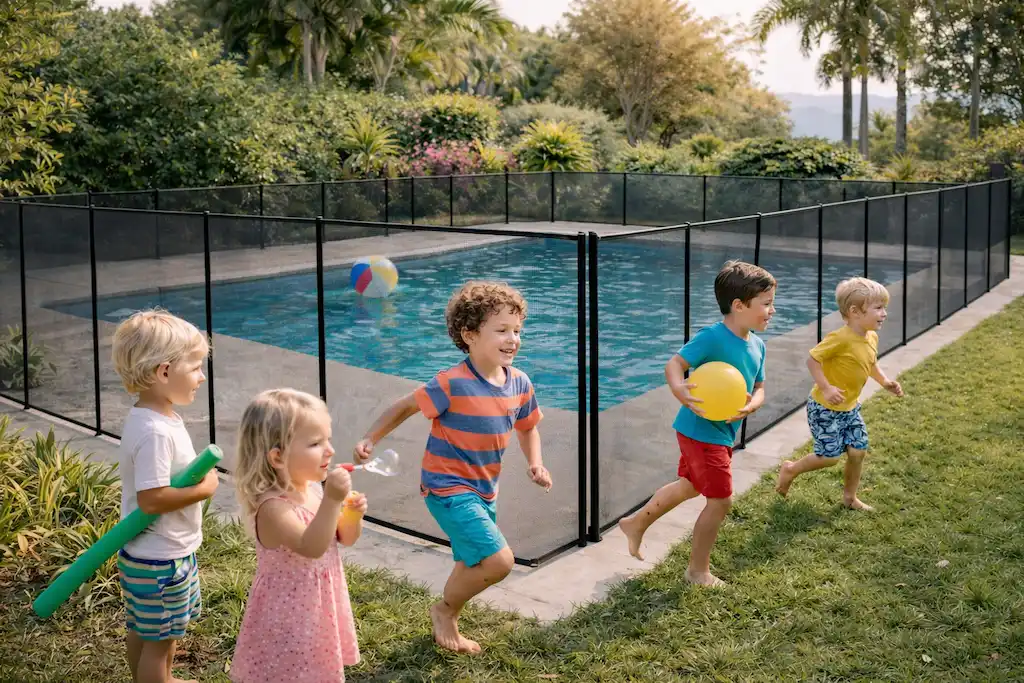
Many pool incidents happen in everyday settings such as private gardens, residential communities or holiday accommodation. In these spaces, children tend to move around freely and may approach the water in a moment of distraction. That is why more and more families are taking preventive measures that help limit access to the pool when there is no direct supervision.
Prevention in family settings
Private pools account for a large share of accidents involving children.
Controlled access to the water
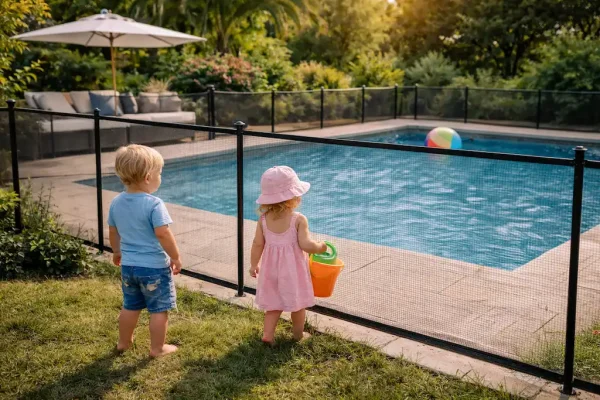
Enclosing the perimeter helps prevent accidental entry.
Greater peace of mind for the family
Lets you enjoy the pool area more safely.
Facts sobre child accidents at swimming pools
According to international health and accident-prevention bodies, drowning is one of the leading causes of accidental death in young children. In many cases, these incidents happen in private pools or family spaces where the surroundings seem safe.
Some key facts
Children under 5
Young children are the most vulnerable group: they are strongly drawn to water and do not yet fully understand the risk.
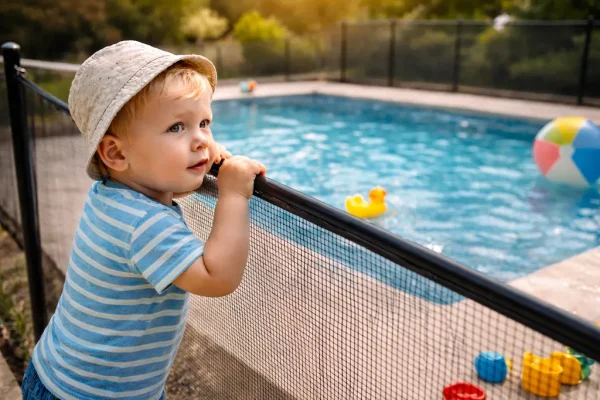
Moments of distraction
Many incidents happen in a few seconds of distraction, when access to the water is not restricted or there is no protective barrier.
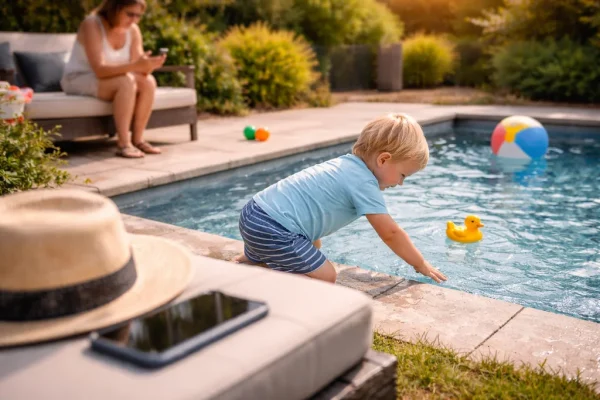
Prevention around the pool
Combining adult supervision with preventive measures around the pool helps reduce risks significantly.

Basic steps toimprove the safetyof children at pools
Child safety at pools is based on a combination of prevention, supervision and organising the surroundings. Taking certain measures around the swimming area helps reduce risks and create a safer space for children and families.
Constant supervision
Having a responsible adult present is the first line of protection when children are near the water.
Access control
Limiting access to the swimming area reduces the chance of accidental entry.
Water safety education
Teaching children basic rules of behaviour around the pool helps prevent risky situations.
The physical protection as a preventive measure
Physical protection as a preventive measure
Although supervision is essential, many families choose to add solutions that help prevent unsupervised access to the water.
The safety fences by Safetykids have become one of the most widely used preventive measures in homes with young children. These solutions let you enclose the pool perimeter and limit access when nobody is directly watching.
These systems do not replace adult supervision, but they do add an extra layer of safety that helps reduce risks.

Tips to improve the safety at the pool
Taking small preventive steps can make a big difference day to day.
01
Constant supervision
Having a responsible adult present is the first line of protection when children are near the water.
02
Access control
Keeping pool access points closed or controlled helps prevent accidental entry when there is no supervision.
03
Water safety education
Teaching children basic rules of behaviour at the pool helps prevent risky situations.
04
Enclosing the perimeter
The SafetyKids pool safety fences let you set up a preventive barrier around the water.
Want to improve the safety of your pool?
If you are thinking about making your pool safer for children or pets, we can help you find the most suitable solution for your surroundings and how you use the space.